Where does the development (creation) of the site begin? The initial stage
Let’s take a closer look at the main stages of website development. At least, what they should be. This is a necessary understanding of the logic of the studio.
Stages of website development:
- Collection of primary information and analysis of competitors.
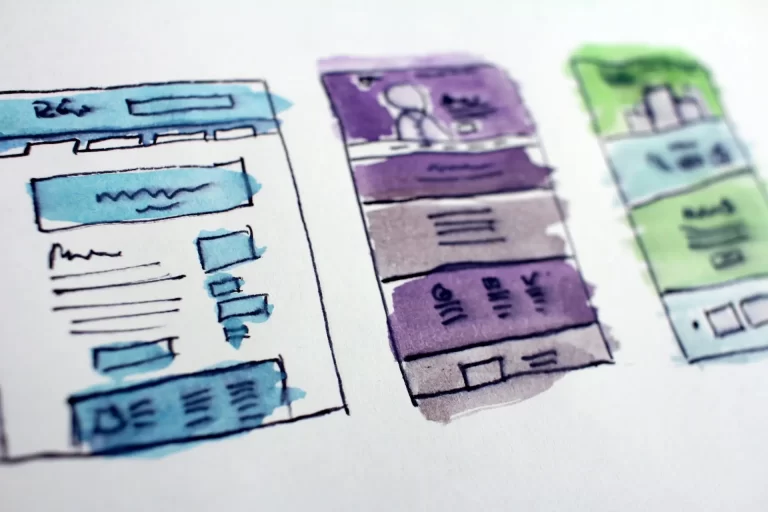
- Development of prototypes and design layouts.
- Design layout.
- Programming the logic of the site and the structure of the database (“basis”, “CMS”)
- Filling the site.
- Promotion of the site.
This article will focus on the collection of primary information.
Collection of primary information about the customer’s business
A serious studio should definitely ask you questions about your business. This is necessary to form the structure of the site, to identify competitive advantages. Agree, the site of a commercial educational institution and a manufacturer of agricultural machinery will be radically different. Here you can save time by preparing a small description (a sheet or two) of the company’s activity in advance. To do this, you can use many free templates with a list of questions or briefings. An example of a good brief for website development can be seen here. It is important to provide as much content and information as possible when preparing the material, possibly some promotional brochures, photos and videos.
The business can be quite specific, and the studio manager will be far from understanding its essence. Provide a list of your competitors, especially those who are on the Internet. Desirably describe the difference between your company and them. In theory, this should be done by the studio itself, but, firstly, they may simply not know your main competitors (in the price range, geographical, etc.), and secondly, they may put the brakes on this moment. This situation often occurs in web studios with a large turnover of orders. Although you can always order the stage of competitor analysis separately.
Analysis of information about competitors is a very important stage and should not be underestimated. Perhaps such analysis will help you to structure your knowledge about them. Already at this stage you can get an idea of the structure of your future site or supplement it, notice successful solutions and mistakes of competitors.
Formalize your analysis with a list like this:
- “Name of the competitor” – www.opponent-site.com – good design, interesting menu. Disadvantages – it is difficult to find contact information, inexpressive catalog.
- …
And so on.
Provide this list to your manager, ask their usability and design experts to make adjustments. They can make valuable comments based on their experience. Believe me, sometimes a simple change of button color can increase conversion by 5-10%. It is also important to understand what audience you are targeting. Young people, middle-aged people, their income level, interests.
If you sell youth clothing, then both the design and structure of the site should be focused on this category. Bright colors and maximum interactivity are appropriate here. Use of slang.
If your audience is middle-aged people with high income, then you should use a completely different design and structure of the site.
Now you should already have a clear idea of what type of site you need. The division here is quite conditional, and one type goes into another, but first you still need to clearly understand what it will be.
Types of sites
The main types of commercial sites, in our opinion:
This site provides information about the company or service. There are text photos and video materials. Services are described.
- Showcase or catalog site
The main difference between a “showcase” and a “business card” is the presence of a product catalog and an order button. There is no payment here. Just an application for something is formed.
The same showcase, but with the ability to pay for the purchase directly on the site. It is clear that the online store will have both a business card and a showcase. Other additional features such as forms, galleries, message boards can be considered separately as an addition to the functionality. In the studio, the classification may differ, but it is always similar. You can easily explain what you need.
From all this, we can name three main points:
- Type of the site.
- The structure of the future website.
- List of materials for filling both text and graphic.
From points 1, 2 and 3 you will immediately understand what material you will have to provide to the studio for the initial filling of the site. If you order a shop window or store, then prepare a structured catalog of your products with images.
After clarifying and forming these points, you can give tasks for design development (color scheme, fonts, types of main pages). Or the studio will make this development independently, based on the analysis of competitors and personal experience.
Remember – if you do not want to just throw money away, you should pay attention to these points. Do not say: “Do it like “Competitor1″ LLC and that’s it”. If you think that this approach is correct, it is better to postpone the order for now.