What information do you need to provide for quality website development

It often happens that when a client orders website development, he does not provide enough specific and important information. It is necessary so that we can create a product taking into account all the requirements and wishes, and the customer can look at his project more comprehensively.
The more comprehensive and detailed information you provide about your project, the faster we will be able to start working, because it will allow us to more accurately determine the cost and possible time frame.
But what information should be provided? How to understand what is important and what is not?
Today we will consider what information you need to provide to develop a quality website.
General information
General information is an elementary input to start any work and provides important data about the customer and the product being created.
It contains in itself:
- Name of the customer company;
- Sphere of activity;
- Mission of the company;
- Main competitors;
- It is extremely important that we can get acquainted with the activities of your company, its position in the market and marketing goals.
Purpose of the site
Do you want to attract new customers and increase the credibility of the company through modern and high-quality design? Or just increase sales of a certain product or service? Or maybe you need a simple representation of the company on the Internet with a phone number and address for communication?
Expectations determine the way we create. With this information, we can get to know your expectations and exceed them.
It will also be useful to provide links to those sites that are closely related to the expectations for its future design and functionality.
New project or redesign
If you have not had a website before – tell us about it.
If you already have a website, but it is not satisfactory in aesthetic or functional terms – let us know and provide a link. So we can get acquainted with the structure, appearance and past of your site.
Type of website
There are a few common conventional types of sites:
- Site business card;
- Online store;
- Web application;
- Corporate website;
- Landing page;
- Website-catalogue;
- Blog.
Although this classification is quite vague, this information is very useful, as it tells us whether the existing CMS will work or whether a non-standard approach is needed. It also shows how many specialists you need to involve for your project.
Site structure
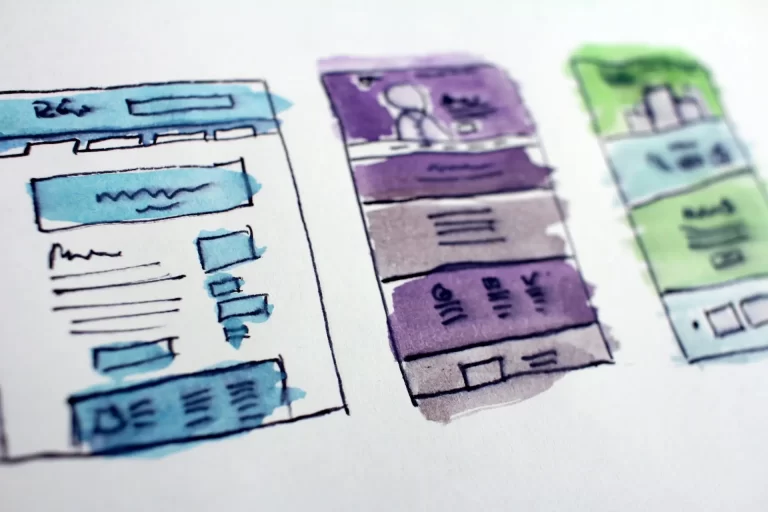
Site structure is the name and number of typical pages for your website.
Usually, the structure is developed by a UX designer, but you can also contribute to the development if you already know what pages should be on your site.
Statics and dynamics
If you want to make changes to the structure of the site, change its content, and interact with users, your choice is a dynamic site.
If you only need to present one product or service without the ability to radically change the structure – a static site will suit you.
Functionality of the site
This is one of the most important points. It is important that you provide as much information as possible regarding the functionality of the website.
For example, “The site must run on CMS WordPress, with the ability to edit information in the graphical interface”; “The site must support the simultaneous use of 500 thousand users”; or “The site must be integrated with 1C”.
The more clearly the functionality of the future site is described, the faster and more efficiently we will work.
Website design
Although design development is the designer’s job, you may have specific wishes regarding it. Or maybe your company already has a corporate color scheme, or font, or even a brand book – feel free to provide us with information about it.
Budget of the project
Information about the budget you are willing to invest in a potential project is an indicator of seriousness and how much you know the development market.
Many clients avoid defining their budget and expect to receive bids first so as not to “show their cards”. However, by communicating your budget, you give us the opportunity to tell you what can be done within that budget.
The price is calculated not based on the client’s budget, but on the time it will take to complete the project. So if the project costs $1000 and the client’s budget is $5000, the price will still be $1000.
It is also true that if the real price of the project is $2000, and the client’s budget is $500, we can make proposals within this budget, removing expensive elements, or replacing them with more budgetary analogues.
Terms of the project implementation
Timing is an important factor that strongly influences work allocation, prioritization and pricing.
The definition of the project delivery date is related to the project documentation, and in 99% of cases we set an approximate deadline for the project delivery.
If you have requirements for the deadline – describe it. If after the calculation it becomes clear that the deadline you set is unrealistic – you will have to work overtime, which will affect the final cost.
Here is the necessary minimum of what you should provide us, or any other. Web studios, to develop a truly high-quality product. Take the process seriously and provide as much information as possible. After all, no one knows your product better than you do.